Why Node.js is Perfect for Building Fast Web Applications

When developers say Node.js is "fast", they’re not referring to raw speed. They refer to how well it can cope with a lot of requests coming in at the same time.
In web applications, speed is more than just how quickly a request completes. It’s about how well a server will do when hundreds or thousands of users are interacting with it at once.”
To understand why Node.js is perfect for fast web applications, we need to take a look at how it internally handles requests.
What Makes Node.js Fast
The reasons Node.js performs well are fourfold:
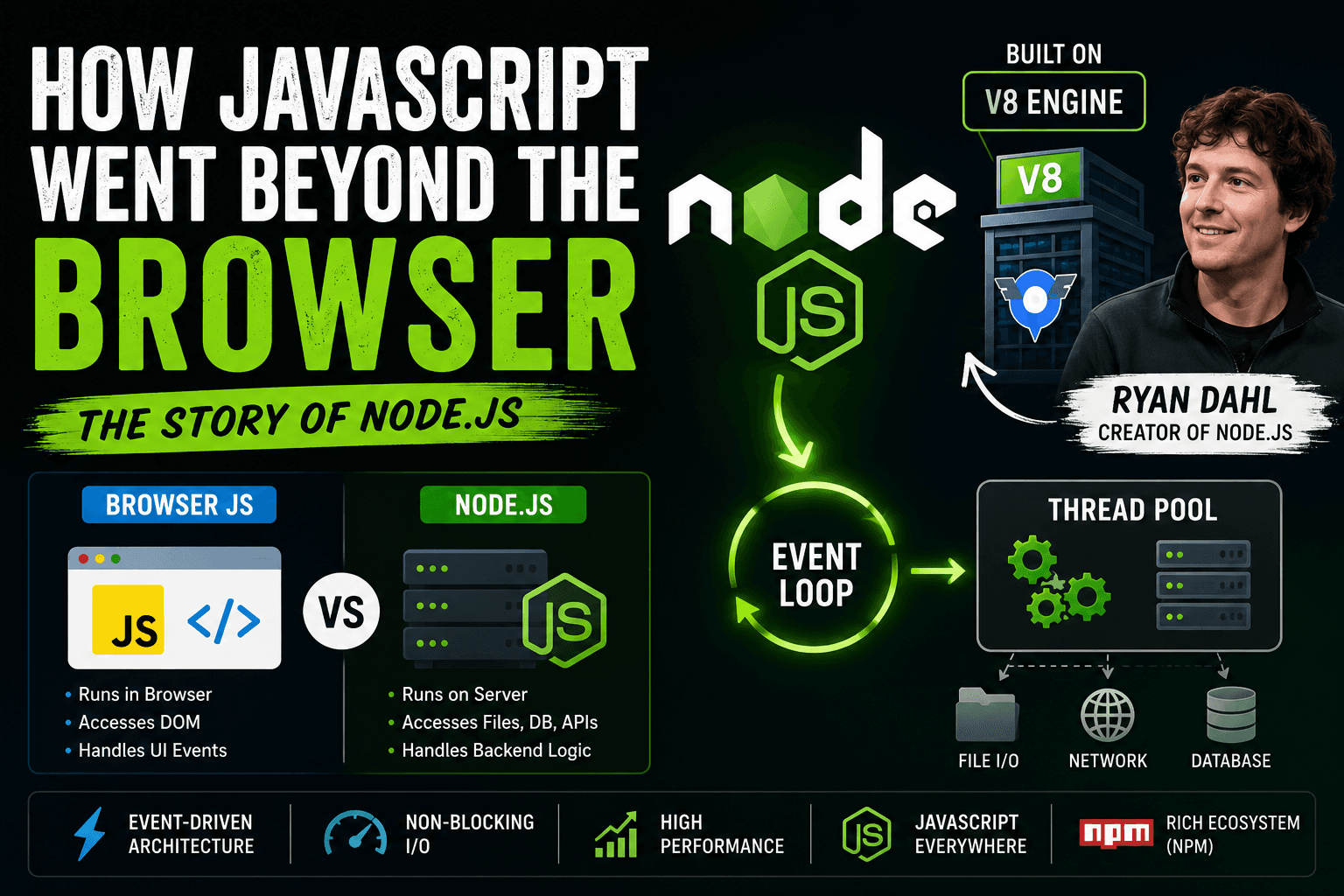
It is powered by the V8 engine, which compiles JavaScript into machine code.
It is based on a non-blocking I/O model.
It employs an event-driven architecture.
It has a single-threaded event loop.
The performance advantage isn’t that you can do one thing very quickly. It’s from being able to manage many things efficiently without waiting time.
Let us be clear.
Blocking vs Non-Blocking Request Handling
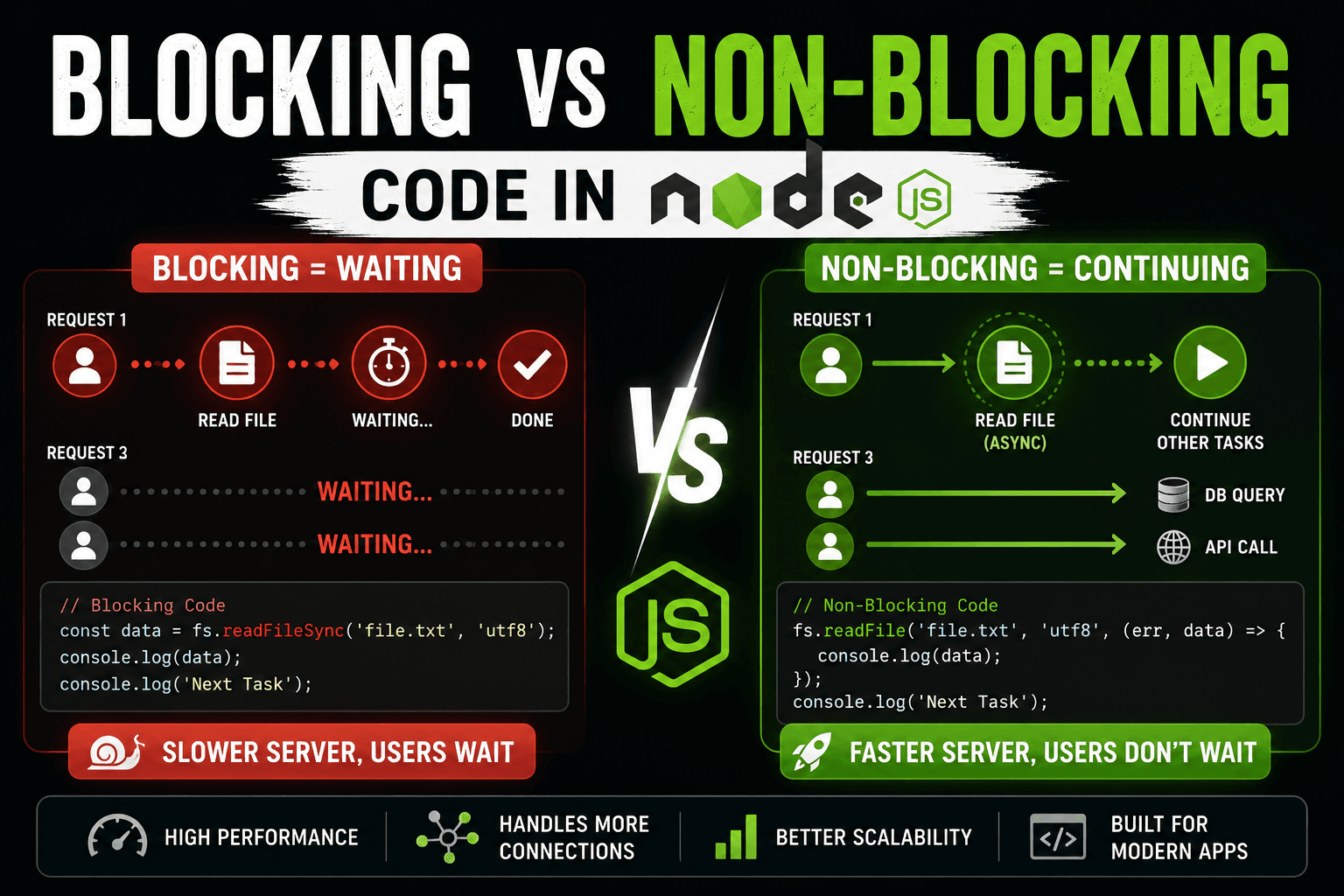
To understand performance, we must first compare blocking and non-blocking systems.
Blocking Model (Traditional Example)
Imagine a restaurant with just one waiter.
Customer places an order. The waiter went to the kitchen to wait for the food to be ready. Mind you, the waiter is not serving other customers.
If there are 10 customers, they only need to wait for the last customer to be done.
Programming-wise:
Waiting for DB from the server.
The server is waiting for the file read.
The server listens for network calls.
The others must wait.
This can cause delays and poor scalability.
Non-Blocking Model (Node.js)
Now imagine the same restaurant, but a different waiter.
Customer places an order. The waiter hands the order to the kitchen. He is soon back, serving other customers. When the food is ready, the kitchen calls the waiter.
This is how Node.js works.
It doesn't wait for long operations.
How do you want to do it?
It takes off the slow operations.
It also processes other requests.
It accepts the results as they come.
This is called non-blocking I/O.
Understanding Non-Blocking I/O
I/O stands for Input/Output operations, such as:
Database queries
File reading
API calls
Network communication
These operations are slow compared to CPU speed because they depend on external systems.
In a blocking system:
Request → Wait for database → Continue
In Node.js:
Request → Ask database → Handle other requests → Database responds → Finish
The difference is that Node.js does not waste time waiting.
That is why it can handle thousands of concurrent connections efficiently.
Event-Driven Architecture
Node.js is event-driven.
What does that mean?
It responds to events, instead of running in a predetermined step-by-step blocking sequence.
Potential events:
A request is received
File finished reading
A database that returns data
The timer has ended
Node.js waits for such events and reacts when they are emitted.
How It Works Conceptually
A request comes in.
Node.js callback registration
The slow task is running in the background.
Node.js continues to process other events.
The callback is run when the background task completes.
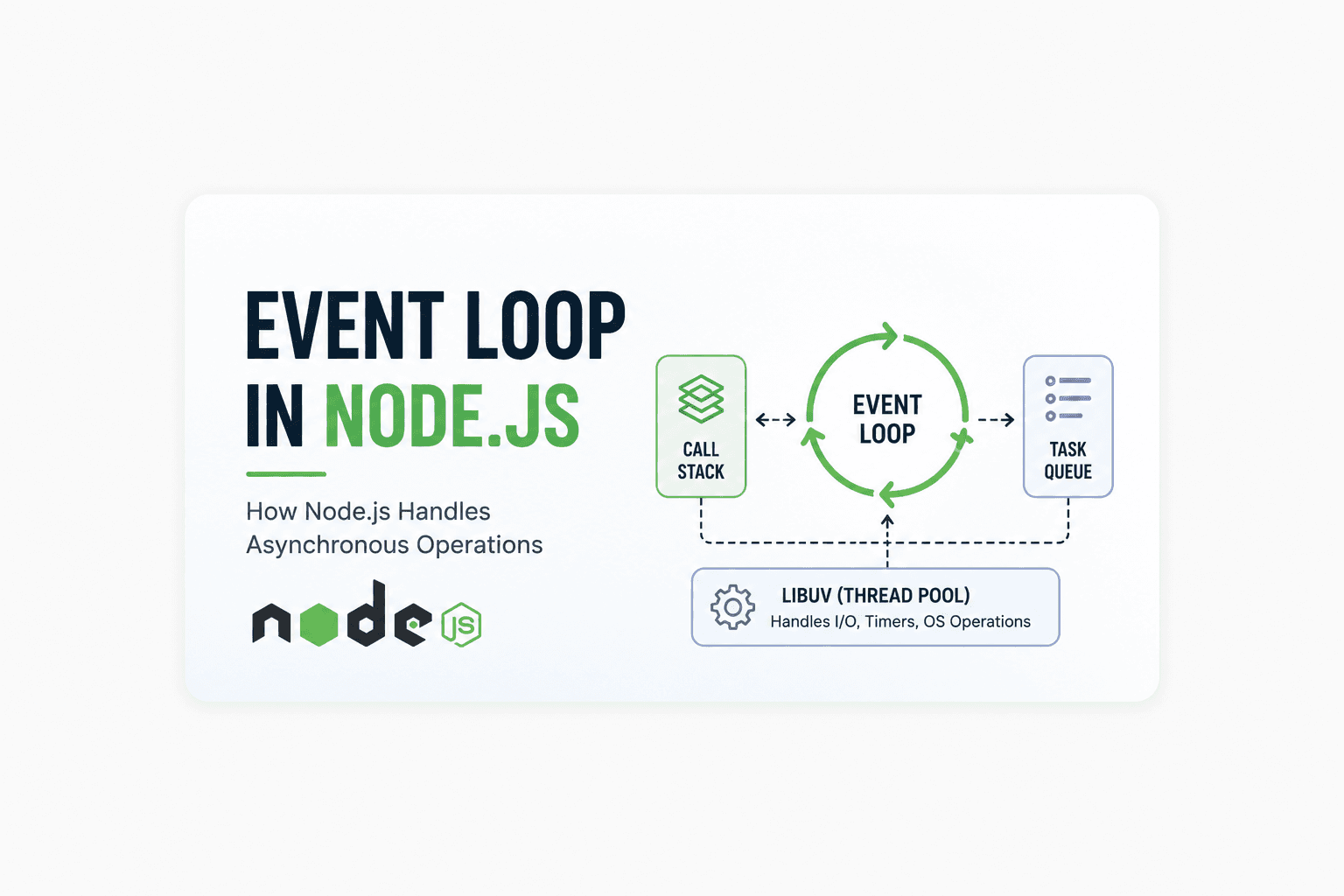
This system is driven by the so-called event loop.
The event loop is constantly checking:
Is the main thread free?
Are there any tasks remaining?
If yes, it does the next task.
This efficient event processing allows Node.js to remain responsive even under load.
Single-Threaded Model Explained
One common misunderstanding is:
"If Node.js is single-threaded, how can it handle many users?"
To answer that, we must understand concurrency vs parallelism.
Concurrency vs Parallelism (Simple Explanation)
Parallelism means:
- Multiple tasks run at the same exact time using multiple CPU cores.
Concurrency means:
- Multiple tasks make progress over time without blocking each other.
Node.js focuses on concurrency, not parallelism.
It uses one main thread but manages many operations without blocking.
Imagine juggling multiple balls.
You are still one person.
You are not doing things at the same time.
But you are managing multiple things efficiently.
That is concurrency.
Why Single-Threading Can Be an Advantage
Because Node.js is single-threaded:
No overhead of thread management.
There are no complicated thread synchronisation problems.
There are no race conditions when multiple threads access shared memory.
That makes it easier and more predictable.
Node.js doesn’t spawn new threads for each request it gets; it delegates asynchronously.
The operating system does background work, such as:
Reading files
Requests (net)
Database Intercommunication
When those tasks are done, Node.js resumes execution.
Where Node.js Performs Best
Node.js is best for the following apps:
I/O intensive
On Air
High concurrent
Network Powered
For example:
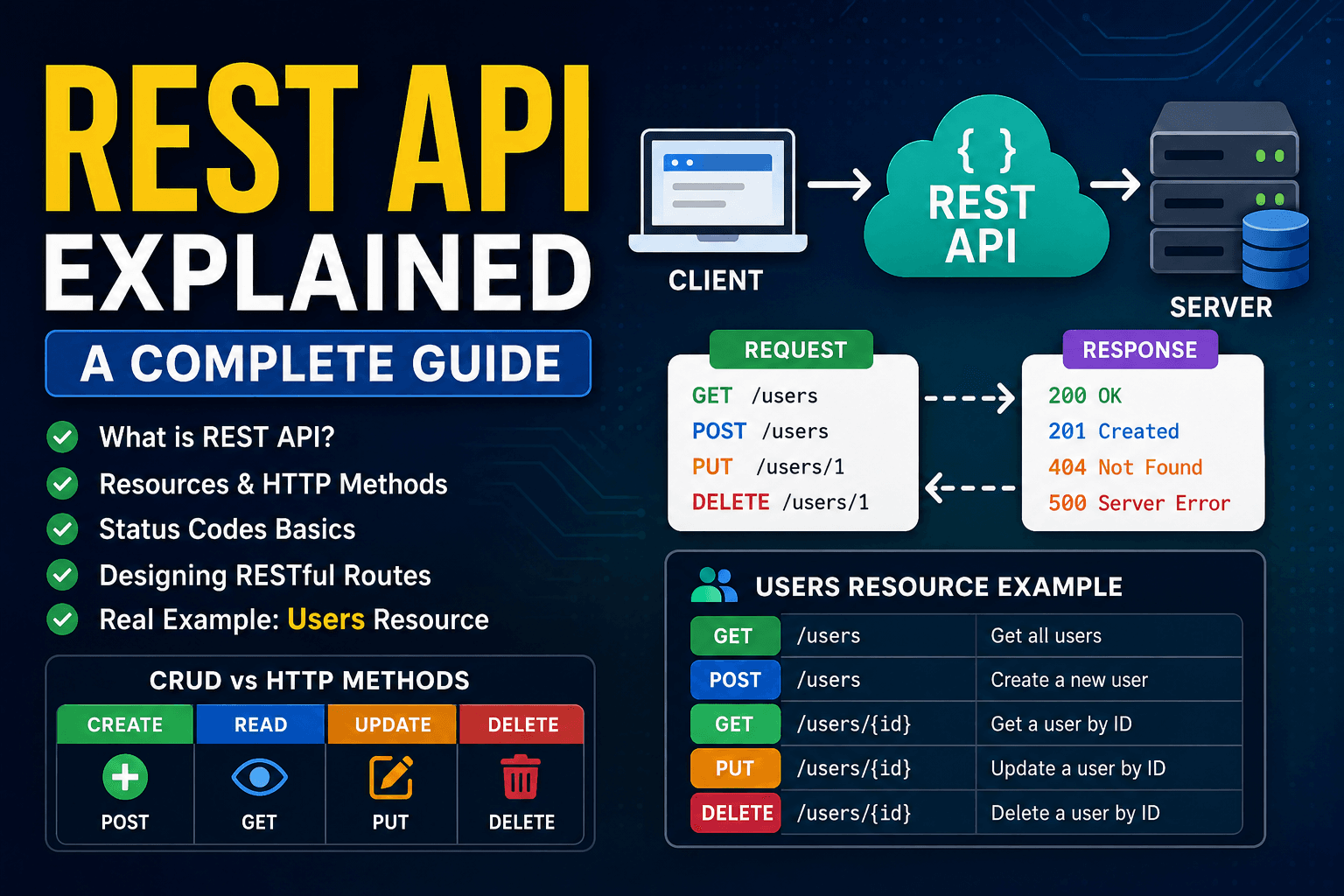
RESTful APIs
Messaging apps
Streaming services –
Dashboards in real time
Online collaboration platforms
Notification systems
It’s especially powerful when your applications are spending more time waiting on external resources than doing heavy CPU calculations.
Where Node.js Is Not Ideal
For completeness, it’s important to understand that Node.js is not best suited for:
CPU heavy workloads
Mathematical calculations heavy
Large image processing
Machine learning jobs
Node.js operates on a single thread, so CPU-heavy operations can cause blocking of the event loop, impacting performance.
However, Node.js is highly efficient for web applications that are mostly doing database and network operations.
Conclusion
Node.js is ideal for building fast web apps as it’s non-blocking and event-driven, meaning it can handle a lot of concurrent requests efficiently.
Node.js will move the slow operations out of the way and will keep processing other tasks. It is light weight and scalable and has less complexities and overheads due to the single threaded model.
Node.js offers an efficient and reliable performance model for I/O intensive, real-time and high-concurrency applications, which makes it a popular choice for modern web development teams across the globe.